Our relationships, careers, families, and personal development are all shaped by an understated force that is not outside of us. It has nothing to do with our upbringing, our boss, the economy, or the events that are going on around us.
Our tongue is the issue at hand.
The words we whisper to ourselves before entering a meeting…The words we use informally to lower expectations at home
The narratives we tell ourselves to protect our feelings;
These brief comments influence the course of our lives.
“The tongue has the power of life and death,” as James clearly demonstrates in the Bible. According to modern psychological research, our words shape our inner world long before our actions do.
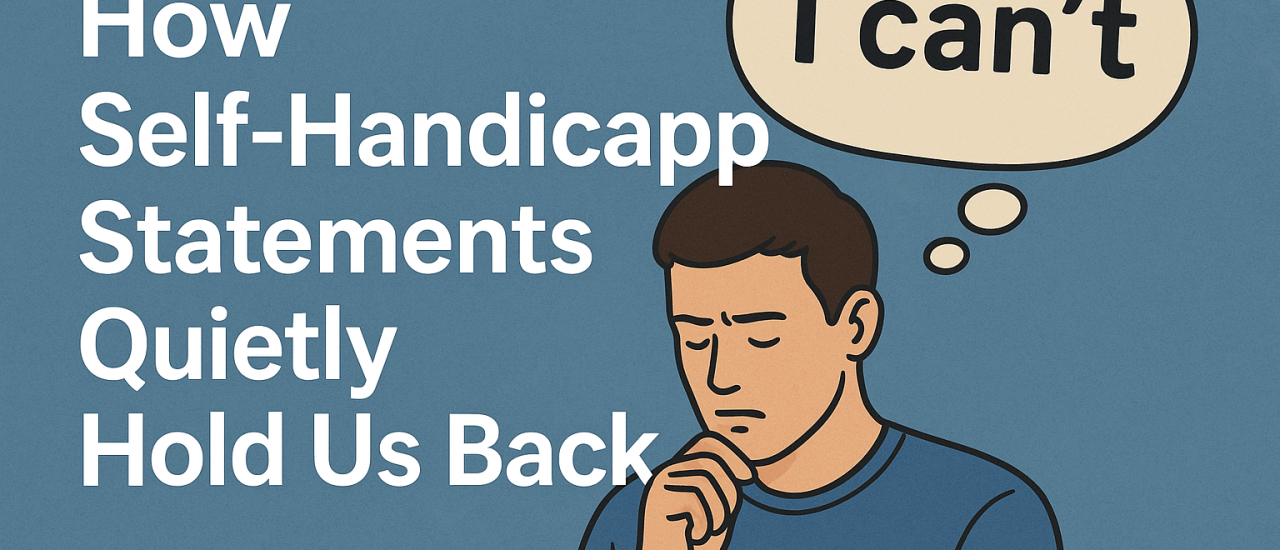
In Transformational Leadership (TL), we teach a powerful tool called Self-Handicapping Statements.
Self-handicapping statements are different from excuses. Excuses come after the event. Self-handicapping statements come before it.
They protect our ego by giving us a soft cushion if we fail:
“I didn’t really prepare.” “I’m not good at these things.” “I know I’ll probably mess it up.”
When we vocalize these thoughts, something subtle and magical happens: We begin to believe them.
They become part of our self-identity, silently dictating our behavior, confidence, and innovation.
Henry Ford captured this truth perfectly:
“Whether you think you can or think you can’t, you’re right.”
Our words shape our beliefs, and our beliefs shape our outcomes.
I can’t even purport to fully understand “the power of the tongue”… (And there goes my own self-handicapping statement 😄)
We all do it—sometimes lightly, sometimes jokingly, but always powerfully. Here are a few subtle and fun examples we often overlook:
At Home
- “I’m not the organized one—leave that to someone else.”
- “I can’t cook like you; I’ll just spoil it.”
In Relationships
- “I’m bad at expressing emotions.”
- “It’s probably just me—my thoughts don’t matter.”
At Work or in Business
- “I’m not a leadership person.”
- “I’m terrible at presentations.”
- “I’m not creative—someone else should handle that.”
They sound small. But the subconscious mind doesn’t understand jokes or sarcasm. It only understands repetition.
So how do we break free?
By taking responsibility for the only three things we truly control:
- Our thoughts
- Our feelings
- Our actions and reactions
Everything else—other people’s opinions, politics, the economy, regrets, and the past—lies either in our circle of influence or our circle of concern. We influence some. We control none.
Complaining and grumbling are easy. Taking responsibility is harder—but transformational.
When we shift our language, our mindset follows. And when mindset shifts, our life shifts.
For more than 30 years, @Transformational Leadership, founded by @Ford Taylor has equipped thousands of leaders around the world with tools that radically improve communication, breed healing & forgiveness, culture, teamwork, and performance.
These tools help us:
- Identify limiting self-language
- Replace harmful patterns with empowering truth
- Communicate with courage and clarity
- Build trust and healthy relationships
- Lead with intentionality, not emotional reaction
And if you’re ready to experience this shift, our January 2026 TLOD Virtual Cohort is open- use this registration link – https://forms.gle/fhf6zVgP94Qr5Qh17. This is a practical, life-changing leadership journey that empowers you to lead yourself—and others—with purpose.
About the article writer; Enock K. Ndungu is a Transformational Leadership Trainer and Director at StrateScope. He is passionate about speaking life into others. At his best, he helps remove constraints and bring clarity to individuals and organizations through training, coaching, strategy formulation, evaluations, and team development.